
How to Choose a Lab Water System | ELGA LabWater

How to choose a lab water system: grade, throughput, modular vs centralized, TCO, sustainability. Compare models and request a consultation here.
Choosing a lab water system is a long-term decision. Most systems run for 7–10 years, so getting it right at the planning stage protects research reproducibility, analyzer uptime and operating budget for the next decade.
The right system depends on five things:
- The water grade your applications require (Type I ultrapure, Type II pure, Type III RO, or CLRW for clinical chemistry)
- Your daily and peak volume
- Whether you need point-of-use or centralized supply
- The specific instruments and assays you need to feed
- Your 5-to-7-year total cost of ownership
This guide walks you through each decision, compares ELGA’s PURELAB (modular) and CENTRA (centralized) ranges, surfaces the most common selection mistakes and links to the construction drawings you need to plan installation. If you’re already past the planning stage and need design drawings, jump straight to the Construction Drawings Library below.
5 questions to answer before buying a lab water system
1. Which water grade do you need?
Lab water is classified into three grades — Type I ultrapure (18.2 MΩ·cm, <5 ppb TOC), Type II pure (>1 MΩ·cm), Type III RO — plus CLRW for clinical chemistry analyzers (CLSI GP40-A4-AMD).
Match grade to your most sensitive application:
- HPLC, LC-MS, ICP-MS, cell culture and PCR need Type I
- Buffer prep and ELISA need Type II
- Glassware washing and autoclave feed need Type III
- Clinical labs feeding diagnostic analyzers need CLRW
2. What’s your daily volume and peak demand?
Most labs size systems on average daily volume and end up under-provisioned for peak demand. Calculate both: total daily dispense across all instruments, plus the highest hourly draw. A 50 L/day average with 10 L/hour peak needs a very different system than a 50 L/day average with 30 L/hour peak. Most ELGA PURELAB models handle peaks up to 2 L/min dispense; CENTRA scales beyond 30 L/min.
3. Point-of-use or centralized?
Point-of-use (modular) means a system per workstation — PURELAB Chorus, PURELAB flex, or PURELAB Quest at each instrument. Centralized means one system feeds the whole lab via a distribution loop — CENTRA R60/120 or R200. Modular is faster to install, easier to redundancy-protect (one failure doesn’t take out the lab), and best for labs under ~200 L/day total. Centralized wins on consumables-per-litre economics, footprint and any application requiring 200+ L/day. The two ranges are also combinable — CENTRA can feed PURELAB Quest polishers for hybrid setups.
4. Which instruments and applications do you need to feed?
List every instrument that needs water: HPLC, LC-MS, ICP-MS, atomic absorption, clinical analyzers, autoclaves, glassware washers. Each defines a feedwater spec. Match your instrument list to ELGA’s application pages (HPLC, mass spectrometry, clinical biochemistry, cell culture) — every page lists the recommended ELGA system. If you’re running clinical analyzers, see our clinical chemistry analyzer page.
5. What does the total cost of ownership look like over 5–7 years?
Capital purchase is typically 30–50% of the lifetime cost of a lab water system; consumables (DI packs, RO membranes, UV lamps, sub-micron filters) and service contracts make up the rest. Compare total cost of ownership (TCO), not sticker price. ELGA's PureSure technology and Hubgrade smart monitoring are designed to extend consumable life and pre-empt service issues to reduce 5-year TCO.
Modular vs centralized: which lab water system scales better?
ELGA’s two flagship ranges sit on opposite ends of the modular–centralized spectrum. PURELAB is point-of-use, one system per workstation. CENTRA is centralized: one system feeds the whole lab via a distribution loop. The right choice depends on daily volume, lab footprint, redundancy need and how you allocate capital expenditure (CapEx) vs operating expenditure (OpEx).
| PURELAB | CENTRA | |
|---|---|---|
| Daily volume sweet spot | Up to ~200 L/day per workstation | 200–10,000+ L/day across multiple drops |
| Redundancy | One failure affects one workstation – natural redundancy | Requires a duplex or backup loop to avoid single-point-of-failure |
| Installation complexity | Plug-in, minimal plumbing | Requires distribution loop, dedicated room, validation |
| Best for | Research labs, single-instrument workstations, growing labs | Clinical reference labs, pharma QC, multi-analyzer departments, multi-floor facilities |
Hybrid option
CENTRA can feed PURELAB Quest polishers at point-of-use, combining centralized economics with point-of-use Type I+ polishing for sensitive applications.
Common mistakes when selecting a lab water system
1. Under-sizing for peak demand
Sizing on average daily volume misses peak-hour draws (e.g., end-of-day glassware washing or simultaneous HPLC mobile-phase prep). Always size for peak L/min, then verify daily volume is met.
2. Ignoring feedwater quality
A Type I system fed with poor-quality municipal water exhausts consumables faster and may not hit spec. Test feedwater hardness, conductivity, chlorine, and TOC before specifying. Our application specialists can review your site water and recommend the right system configuration. Get in touch for more information.
3. Choosing modular when scale demands centralized (or vice versa)
Clinical labs with 5+ analyzers running 200+ L/day shouldn’t try to make point-of-use work. Single-instrument research labs shouldn’t over-invest in CENTRA. Match architecture to scale (see modular vs centralized table).
4. Missing application-specific specs
Clinical chemistry analyzers require CLRW (CLSI GP40-A4-AMD), not generic Type I. LC-MS requires <2 ppb TOC, not the <5 ppb of standard Type I. List every instrument and confirm its OEM-published feedwater spec.
5. Forgetting consumables in the budget
Sticker-price comparisons hide the 30–50% of total cost of ownership (TCO) that consumables account for. Always request a 5-year quote that includes DI packs, RO membranes, UV lamps, and filters, and ask which consumables are model-specific vs interchangeable.
Is Type I water always necessary?
Short answer: No.
Type I ultrapure water (18.2 MΩ·cm, <5 ppb TOC) is required only for the most sensitive applications. Many lab workflows are over-specified to Type I when Type II or III would meet the analytical requirement and cost significantly less to operate.
When you need Type I
HPLC, UHPLC, LC-MS, GC-MS, ICP-MS, ICP-OES, atomic absorption spectroscopy, cell and tissue culture, PCR, qPCR, NGS, sequencing, trace-element analysis.
When Type II is sufficient
Buffer preparation, ELISA and immunochemistry, microbiology, electrochemistry, spectrophotometry, general reagent preparation.
When Type III is enough
Glassware washing, autoclave feed, media preparation, and as feedwater for Type I polishing systems.
Clinical labs are a special case
Clinical chemistry analyzers (Roche Cobas, Abbott Alinity, Siemens Atellica, Beckman AU) need CLRW per CLSI GP40-A4-AMD — different from Type I, optimised for high-throughput analyser feedwater.
How a lab water system supports green-lab sustainability
Lab water systems are a high-leverage point for green-lab initiatives, cutting single-use plastic, reducing shipping emissions and consuming less energy than the alternatives:
- Replace bottled lab water purchases — a 10 L/day lab can avoid 3,600+ single-use bottles per year
- ELGA’s PURELAB flex was designed specifically to reduce per-liter carbon footprint vs. legacy designs (see ELGA’s blog on PURELAB flex carbon-footprint reduction)
- Modular consumables (DI packs, RO membranes, UV lamps) are returnable/recyclable in many regions — confirm with your ELGA partner
- RO + DI + UV combination uses significantly less energy than legacy still-distillation systems
- Hubgrade smart monitoring extends consumable life and reduces unplanned consumable changes
Compare ELGA lab water system ranges
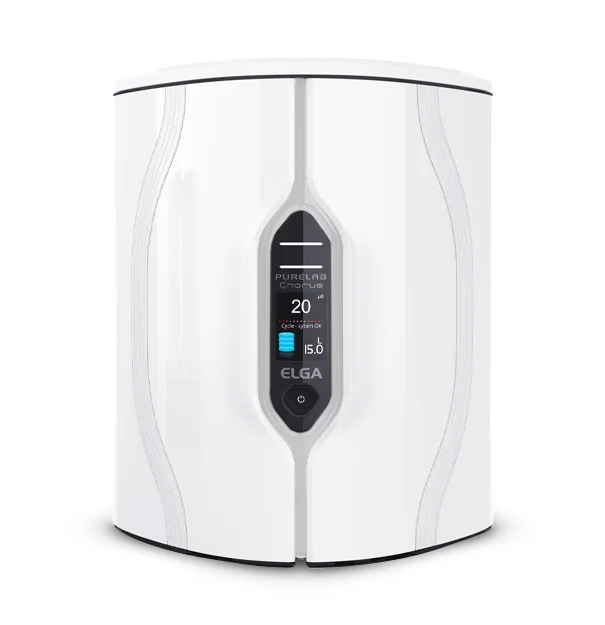
PURELAB® — Point-of-use
Modular Type I / II / III • Chorus 1/2/3, flex, Quest, Dispenser • Per-instrument workstations
› View PURELAB range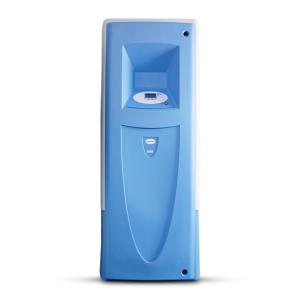
CENTRA® — Centralized
Centralized purification + distribution • R60/120, R200, RDS • Multi-instrument labs, multi-floor facilities
› View CENTRA range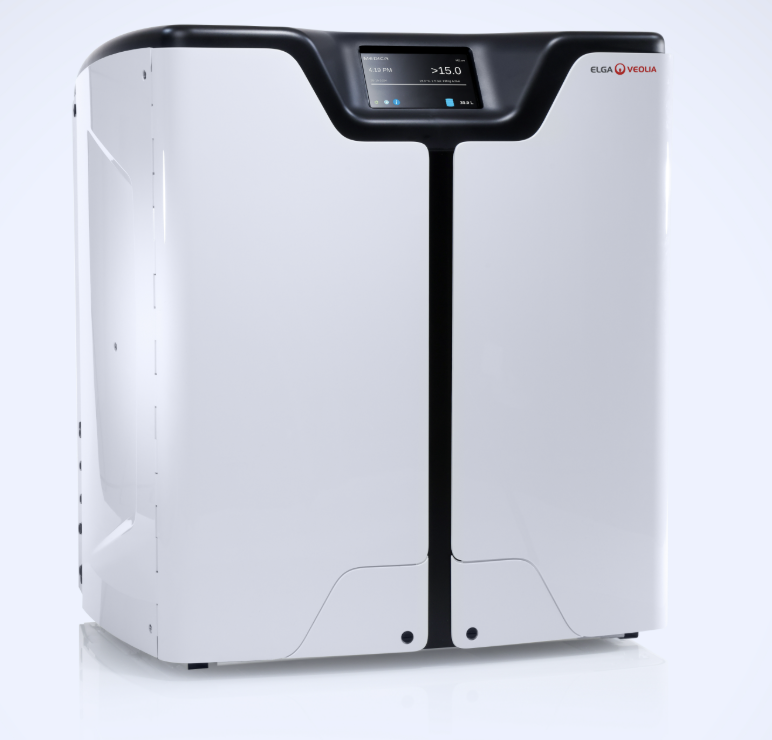
MEDICA® — Clinical analyzers
CLRW for clinical chemistry • 7/15, 150, Pro, R200, BIOPURE 2024 • Roche, Abbott, Siemens, Beckman analyzers
› View MEDICA rangeBIOPURE® — Healthcare
Endoscope reprocessing, sterile prep, dialysis • 300/600 L/hr • EN 15883, HTM 2030/2031 compliant
› View BIOPURE range
FAQs: choosing a lab water system
- What are common mistakes when selecting a lab water system?
The five most common mistakes are under-sizing for peak demand, ignoring feedwater quality, choosing modular when scale demands centralized (or vice versa), missing application-specific specs (like CLRW for clinical analyzers) and forgetting consumables in the 5-year budget. Most failed selections trace back to comparing sticker price rather than total cost of ownership.
- How do I evaluate ease-of-use in a lab water system?
Ease-of-use is largely determined by four things: how quickly the system dispenses on demand, whether consumables are user-changeable or require service visits, whether the user interface clearly surfaces water quality and consumable life and whether the system supports remote monitoring (e.g., ELGA Hubgrade). Ask for a hands-on demo before buying.
- Modular vs centralized lab water — which scales better?
For daily volumes under ~200 L/day, modular (point-of-use) scales better because each new workstation adds a self-contained system with natural redundancy. For 200+ L/day across multiple instruments or floors, centralized scales better because per-liter consumables economics and footprint improve dramatically. Hybrid setups (CENTRA + PURELAB Quest polishers) combine the strengths of both.
- What is the lifecycle cost of a lab water system?
Over a typical 5–7 year lifespan, capital purchase is 30–50% of total cost, consumables are 30–50%, and service is 15–25%. The exact mix varies by usage volume and water grade. Centralized systems have higher CapEx but lower per-litre OpEx; modular systems have lower CapEx but higher per-litre OpEx. Compare TCO over 5 years, not sticker price.
- How does a lab water system support green-lab sustainability?
An in-lab water system replaces single-use bottled water (a 10 L/day lab avoids 3,600+ bottles/year), reduces shipping emissions, uses less energy than legacy still-distillation and supports recyclable consumables. ELGA’s PURELAB flex was specifically designed for reduced per-liter carbon footprint; Hubgrade smart monitoring extends consumable life and reduces unplanned changes.
- Is Type I ultrapure water always necessary?
No. Type I (18.2 MΩ·cm, <5 ppb TOC) is required for HPLC, LC-MS, ICP-MS, cell culture and PCR. Type II is sufficient for buffer prep, ELISA, microbiology and spectrophotometry. Type III is enough for glassware washing and autoclave feed. Clinical chemistry analyzers require CLRW (CLSI GP40-A4-AMD), a different specification optimized for high-throughput analyzer feedwater.
Construction Drawings - Free PDF Downloads
Already past the planning stage? Download installation and dimensional drawings (PDF and DWG) for every current ELGA lab water system below, grouped by product family.
PURELAB Chorus
- PURELAB CHORUS 1 | 2 | 3 - pdf
- PURELAB CHORUS 1 Complete | 2+ - pdf
- PURELAB Halo Dispenser Basic | Advanced - pdf 1
- PURELAB Halo Dispenser Basic | Advanced - pdf2
- PURELAB CHORUS tank 15 liters - pdf
- PURELAB CHORUS tank 30 liters - pdf
- PURELAB CHORUS tank 60 liters - pdf
- PURELAB CHORUS Tank 100 Liter - pdf
PURELAB flex
- PURELAB flex 1 | 2 - pdf 1
- PURELAB flex 1 | 2 - pdf 2
- PURELAB flex 3 | 4 - pdf 1
- PURELAB flex 3 | 4 - pdf 2
CENTRA
- CENTRA R60 | 120 - pdf 1
- CENTRA R60 | 120 - pdf 2
- CENTRA R200 - pdf
- CENTRA RDS - pdf
- CENTRA booster station LA694 - pdf
PURELAB Classic / Option Q / Option R / Prima / Pulse / Ultra
- PURELAB Classic - pdf 1
- PURELAB Classic - pdf 2
- PURELAB Classic - pdf 3
- PURELAB option Q 7 | 15 - pdf 1
- PURELAB option Q 7 | 15 - pdf 2
- PURELAB option Q 7 | 15 - pdf 3
- PURELAB option R 7 | 15 - pdf 1
- PURELAB option R 7 | 15 - pdf 2
- PURELAB option R 7 | 15 - pdf 3
- PURELAB Prima 7 | 15 | 30 - pdf 1
- PURELAB Prima 7 | 15 | 30 - pdf 2
- PURELAB Prima 7 | 15 | 30 - pdf 3
- PURELAB Pulse - pdf 1
- PURELAB Pulse - pdf 2
- PURELAB Pulse - pdf 3
- PURELAB Ultra - pdf 1
- PURELAB Ultra - pdf 2
- PURELAB Ultra - pdf 3
ELGA Tanks & Accessories
- ELGA Docking Tanks 25 Liter - pdf
- ELGA Docking tanks 35 liters - pdf
- ELGA Docking Tanks 25 | 35 liters - Installations - pdf
- ELGA tanks 3 level switch 25 | 40 | 75 liters - pdf
- ELGA tanks 5 level switches 25 | 40 | 75 liters - pdf
- ELGA tanks level switch LA631 | LA633 - pdf
Construction Drawings - DWG
The above drawings are also available as DWG files and can be downloaded as a zip folder.