
Water purity in CRISPR workflows: Standards, risks and best practices
13 Oct 2026
In little more than a decade, Clustered Regularly Interspaced Palindromic Repeats (CRISPR)-Cas9 has become one of the defining capabilities of modern molecular biology. It is one of the most widely adopted of a broader family of gene editing methods—including base editing and prime editing—that together have become central tools for targeted genetic modification across research and therapeutic development, opening a credible path toward treating human genetic disease.
Following the 2023 FDA approval of the first CRISPR-based therapy, CASGEVY®, for the treatment of sickle cell disease, several hundred gene editing clinical trials began worldwide, demonstrating how quickly the field continues to evolve.1,2 CRISPR is also transforming Chimeric Antigen Receptor (CAR)-T cell therapy, offering greater precision and simplicity than the viral vectors traditionally used to engineer these cancer-targeting cells.3 As the prevalence of gene editing in clinical settings increases, the focus on precision and safety grows accordingly.
Editing genetic material leaves very little room for error. As well as the editing tools themselves, the reliability of a result depends on rigorous standards being applied across the entire workflow, including the quality of the reagents used. Each is a potential source of variability. One of the most pervasive, yet frequently least scrutinized, is water.
This article examines where water is used throughout the CRISPR workflow, the purity standards that apply, how insufficient purity affects experimental outcomes and what to consider when selecting a molecular biology water purification system.
Water is present throughout the CRISPR workflow
| Workflow stage | How water is used | Contamination risk | Consequence |
|---|---|---|---|
| Guide RNA (gRNA) design, synthesis & reconstitution | ● Reaction medium for in vitro transcription ● Solvent for reconstituting synthetic guides and diluting working stocks | Nuclease (RNase) | Degrades the guide, destroying its targeting information |
| Plasmid preparation & HDR/donor-template | ● Bacterial culture, all purification buffers and final template storage | Nuclease | Degrades donor template, lowering HDR efficiency |
| Cas9 protein & ribonucleoprotein (RNP) complex preparation | ● Purification and storage buffers ● RNP assembly buffer | Nuclease and metal ions | Nuclease disrupts clean assembly; ionic imbalance can reduce Cas9 protein activity |
| Delivery (electroporation & transfection) | ● Component of electroporation buffer and transfection medium | Endotoxin | Reduces cell viability and transfection efficiency |
| Cell recovery, culture & cryopreservation | ● Media, wash buffers and cryopreservation solutions | Endotoxin and bioburden | Endotoxin suppresses growth; bioburden contaminates the culture |
| Downstream QC | ● Largest volume in PCR/qPCR/dPCR mastermixes ● No-template control | Inhibitory ions and nuclease | Inhibitory ions suppress amplification; nuclease degrades template/primers |
Not all water is equal: The impact of insufficient purity
For sensitive molecular biology applications, the water purity benchmark is Type I (18.2 MΩ·cm at 25°C). That resistivity measurement is the highest practically achievable, indicating ionic content reduced almost to the limit of detection. But resistivity is not the only consideration. A wide range of impurities can undermine editing efficiency, reproducibility and the accuracy of downstream analysis:
- Nucleases: Guide RNA synthesis, reconstitution and donor-template preparation all require nuclease-free water. Because nucleases are active at very low concentrations and are common contaminants of reagents and labware, even trace levels can degrade the RNA and DNA that these gene editing preparation steps depend on.4
- Metal ions: Cas9 protein is a magnesium-dependent nuclease, cleaving DNA through a two-metal-ion mechanism in which water acts as the primary nucleophile.5 Contaminating metal ions such as iron, copper and zinc compete with the Mg²⁺ that catalysis depends on, reducing cleavage activity.6
- Organic compounds: The enzyme-driven steps throughout the workflow, including amplification, ligation, digestion and sequencing, require water with low total organic carbon (TOC). Organic residues inhibit these reactions and raise the background, obscuring low-abundance signals that edit detection depends on.7 Removing organics, for example by UV photooxidation, measurably improves results.8
- Endotoxin and bioburden: Transfection and electroporation require low endotoxin levels and a low microbial load, both of which can reduce cell viability and transfection efficiency.9 In clinical contexts, the stakes are higher, as residual endotoxin can provoke an immune response.10
The purity levels needed to avoid these issues are defined by published standards. Required purity for molecular and analytical work is specified by ASTM D1193 (Type I features resistivity >18 MΩ·cm, TOC <50 ppb) and ISO 3696 (Grade 1 features conductivity ≤0.1 µS/cm, silica ≤0.01 mg/L).11,12 Clinical and diagnostic testing follows CLSI's Clinical Laboratory Reagent Water (CLRW: resistivity ≥10 MΩ·cm, TOC <500 ppb, bacteria <10 CFU/mL), while therapeutic development and GMP manufacturing require United States Pharmacopeia (USP) grades: Purified Water (conductivity <1.3 µS/cm, TOC ≤500 ppb) and Water for Injection, which adds a strict endotoxin limit (<0.25 EU/mL) for material administered to patients.13
Choosing a water purification system for CRISPR workflows
Producing water to the high purity standards required for sensitive molecular workflows is the job of the water purification system. Below, we explore the factors worth considering when choosing the right system for your lab.
Purity
No single purification step removes every contaminant, so the quality grade a system achieves depends on the combination of technologies applied:
- Reverse osmosis removes contaminants with effective diameters greater than ~0.1 nm, including over 90% of ionic contamination, most organic compounds and effectively all particulates
- Electrodeionization and ion exchange purification remove ions and other charged species, including organic acids
- UV photooxidation uses 185 nm light to break large organic molecules into ionized fragments—later removed by ion-exchange resin—and 254 nm light to inactivate bacteria by damaging their nucleic acids
- Sub-micron filtration removes contaminants larger than the specific pore size: a pore size of ≤0.22 μm blocks almost all bacteria
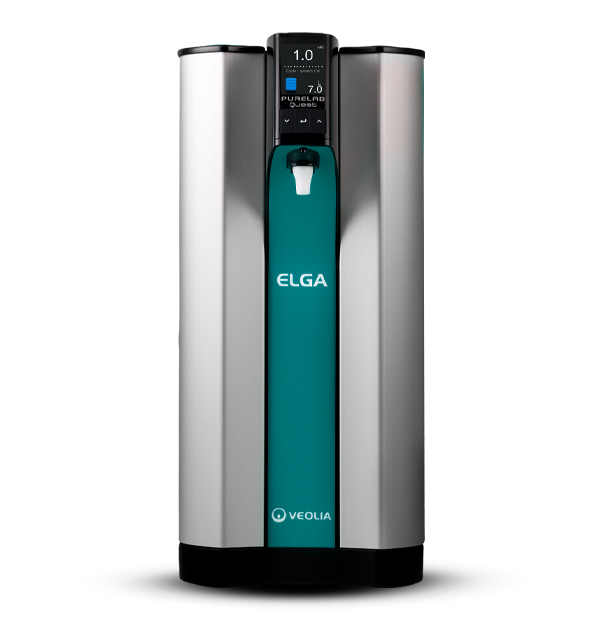
For example, the Purelab® Quest provides labs with a reliable supply of water types I, II and III by combining multiple purification techniques, including reverse osmosis, activated carbon filtration and UV photooxidation.
Usability
A system’s specification should only be trusted if the system is operated correctly. Unintuitive systems increase the likelihood of operator error, which may undermine both purity and consistency. A well-designed interface reduces these errors, shortening onboarding and training for new users, while features like auto-dispense free up time for high-value work.
The same principle of simplicity helping to protect purity also applies to hardware. For example, many Type 1 water purification systems require an already-purified feed, thus necessitating the installation and maintenance of a separate system. The Purelab Chorus 1 Complete takes potable tap water straight to Type 1 ultrapure water in a single unit, removing that dependency and the extra failure points that come with it, and providing comprehensive parameter readings that simplify quality monitoring.
Assurance
For well-maintained purification systems, the greatest risk to water purity comes once the water has been dispensed. Water dissolves more substances than any other liquid, which makes it extremely useful in the lab, but also highly susceptible to contamination, including from:
- Atmospheric CO₂, causing resistivity to drop instantly
- Ions leached from glassware and plastics
- Organics and microbes from container surfaces
Purity is therefore best assured at the point of use. A system that produces water on demand and continuously monitors resistivity, TOC and microbial levels before dispensing provides accurate insight into water quality. Bottled water offers less certainty, as its quality is verified at bottling but may be impacted by storage conditions and duration. Read more on how bottled and in-house water compare on quality, value and sustainability.
Compliance
In regulated environments, including pharmaceutical manufacturing, water purity must be documented and traceable. Ongoing monitoring data and system changes must be captured as secure, auditable records. Systems that generate these automatically — such as the Purelab Pharma Compliance, designed to meet the strict demands of GxP, FDA 21 CFR Part 11 and EU Annex 11 regulation — reduce the administrative burden.
Modularity
Since so many steps in the gene editing workflow depend on a supply of pure water, system downtime can be costly. Modular systems with individually serviceable components help to minimize downtime, enabling individual parts to be repaired or replaced quickly and cost-effectively, avoiding the expense and disruption of replacing the whole system.
Sustainability
Producing ultrapure water consumes a substantial amount of water and energy, making system choice an environmental decision as well as a scientific one. Many purification systems reject 3–5 liters of feedwater for every liter of pure water produced, so a large-scale gene editing lab can easily consume several times the amount of water it actually uses.14
Many newer designs improve on this, reducing wastewater and energy use and using more sustainable materials — the Purelab® Quest, for instance, is made from 85% reclaimed plastic. Independent environmental ratings, such as the My Green Lab® ACT® Ecolabel, make these impacts easier to compare between systems. Read more on how ELGA can help reduce your lab's environmental footprint.
Purelab® ultrapure water solutions for CRISPR workflows
The unsung hero: Water purity underpins reliable gene editing
Water is embedded throughout the CRISPR workflow, from guide RNA synthesis to downstream QC, which means any impurity it carries has repeated opportunities to alter the outcome. Nucleases, metal ions, organic compounds and endotoxin can each compromise the integrity of sensitive steps and readouts, resulting in low editing efficiency and failed reactions.
For an input this fundamental, water is easy to overlook. Treating it as a reagent rather than merely a utility mitigates that and prevents water from becoming a hidden source of error. Demand for ultrapure water in genomics labs will only rise as the field continues to advance, making reliable, efficient and sustainable production a growing priority.
Looking for an ultrapure water solution?
ELGA specializes in water purification systems for research and regulated environments, supporting gene editing R&D and QC with purpose-built solutions.
BOOK A DEMOReferences
- CMN DB 2.0 - Global CRISPR Clinical Trials Database. Accessed August 20, 2026. https://crisprmedicinenews.com/cmn-db-20/
- FDA. FDA Approves First Gene Therapies to Treat Patients with Sickle Cell Disease. FDA. September 8, 2024. Accessed August 20, 2026. https://www.fda.gov/news-events/press-announcements/fda-approves-first-gene-therapies-treat-patients-sickle-cell-disease
- Lei T, Wang Y, Zhang Y, et al. Leveraging CRISPR gene editing technology to optimize the efficacy, safety and accessibility of CAR T-cell therapy. Leukemia. 2024;38(12):2517-2543. doi:10.1038/s41375-024-02444-y
- Henry E, Charalambous E, Betsou F, Mathieson W. Implementing routine monitoring for nuclease contamination of equipment and consumables into the quality Management system of a laboratory. Heliyon. 2024;10(2):e24603. doi:10.1016/j.heliyon.2024.e24603
- Casalino L, Nierzwicki Ł, Jinek M, Palermo G. Catalytic Mechanism of Non-Target DNA Cleavage in CRISPR-Cas9 Revealed by Ab Initio Molecular Dynamics. ACS Catal. 2020;10(22):13596-13605. doi:10.1021/acscatal.0c03566
- Das A, Rai J, Roth MO, et al. Coupled catalytic states and the role of metal coordination in Cas9. Nat Catal. 2023;6(10):969-977. doi:10.1038/s41929-023-01031-1
- Schrader C, Schielke A, Ellerbroek L, Johne R. PCR inhibitors – occurrence, properties and removal. J Appl Microbiol. 2012;113(5):1014-1026. doi:10.1111/j.1365-2672.2012.05384.x
- Mabic S, Kano I. Impact of purified water quality on molecular biology experiments. Clin Chem Lab Med. 2003;41(4):486-491. doi:10.1515/CCLM.2003.073
- Faust C, Beil C, Dittrich W, Rao E, Langer T. Impact of lipopolysaccharides on cultivation and recombinant protein expression in human embryonal kidney (HEK-293) cells. Eng Life Sci. 2021;21(11):778-785. doi:10.1002/elsc.202100065
- Zheng Q, Wang T, Zhu X, et al. Low endotoxin E. coli strain-derived plasmids reduce rAAV vector-mediated immune responses both in vitro and in vivo. Mol Ther Methods Clin Dev. 2021;22:293-303. doi:10.1016/j.omtm.2021.06.009
- ASTM. Standard Specification for Reagent Water. Accessed August 17, 2026. https://store.astm.org/d1193-06r18.html
- ISO 3696:1987. ISO. Accessed August 17, 2026. https://www.iso.org/standard/9169.html
- USP. FAQs: Water for Pharmaceutical and Analytical Purposes | USP. Accessed August 17, 2026. https://www.usp.org/frequently-asked-questions/water-pharmaceutical-and-analytical-purposes
- Laboratory Water Conservation: Reducing Your Lab’s Hidden Footprint. My Green Lab - Education. Accessed July 29, 2026. https://mygreenlab.org/resources/water/
CTA Blogs
#e95f47