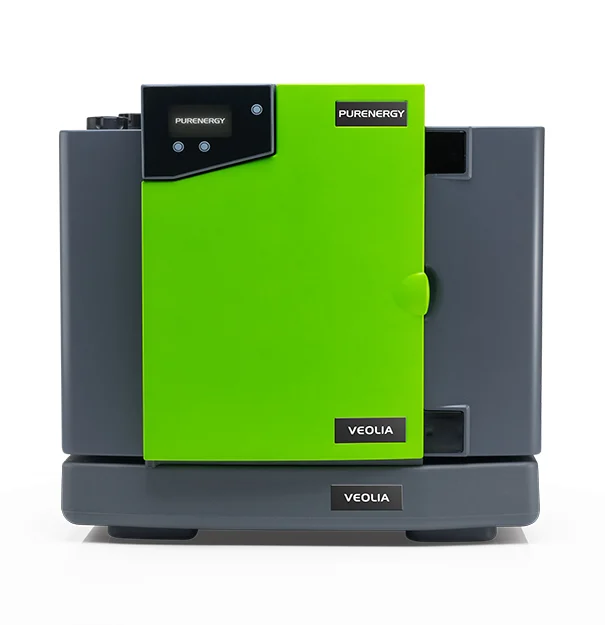
Lab Water Purification Systems - From ELGA LabWater
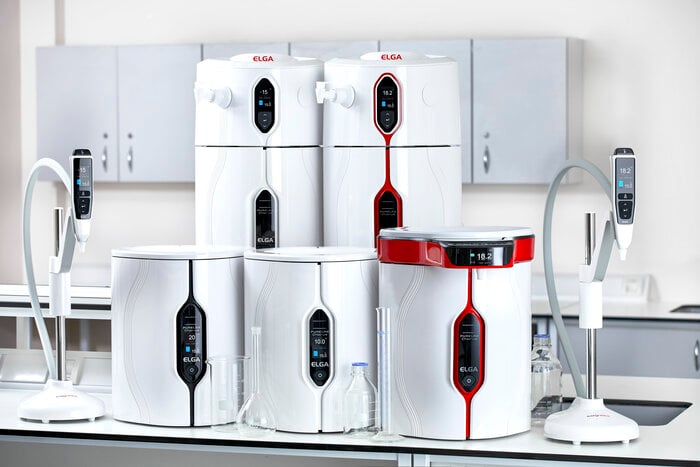
ELGA LabWater develops, builds and installs laboratory water purification system designed to provide you with the pure water you need to complete your work in the lab. Whether you need general grade water (Type III) through to Ultrapure Water (Type I), our team will work with you to ensure you have the system best suited to your needs.
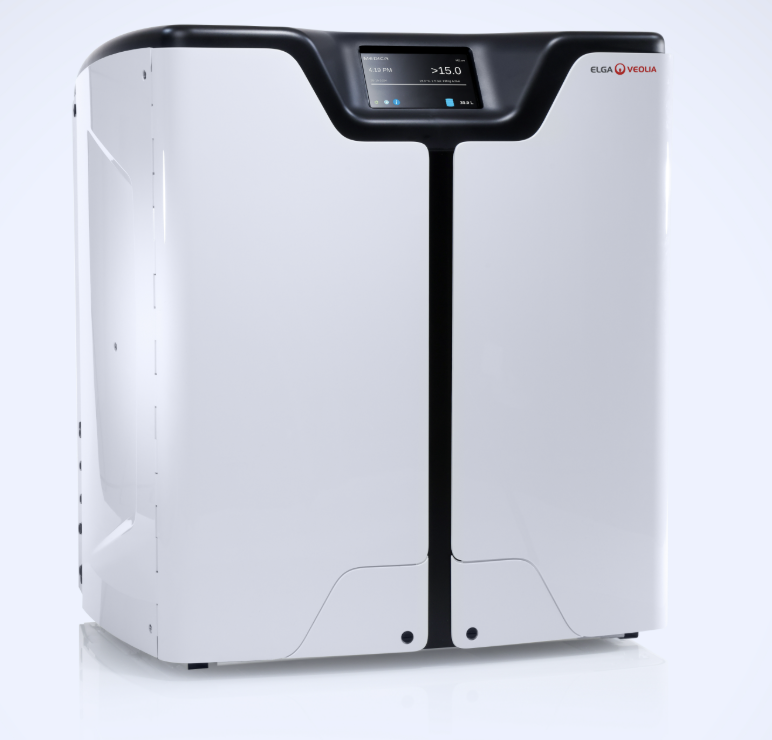
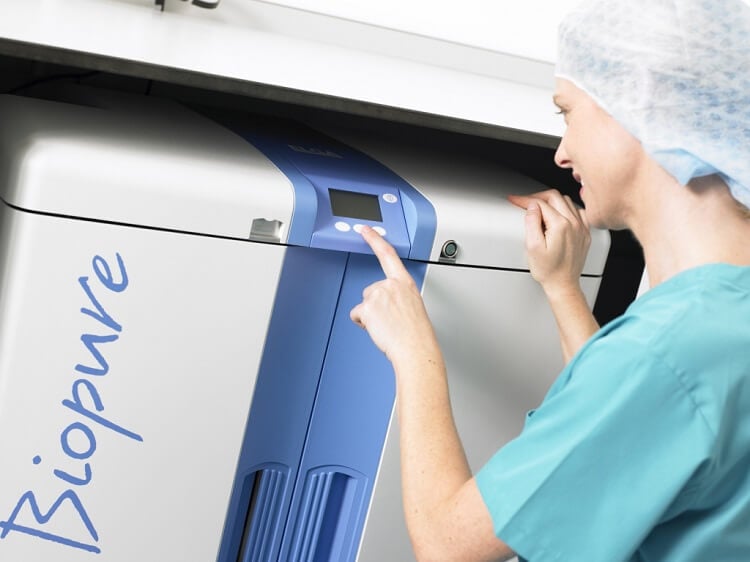
Specialising in systems for clinical work, we provide a range of different water systems, from PURELAB through to MEDICA, CENTRA and BIOPURE. Our systems utilise the latest PURESURE water filtration technology to provide the best results.
Find out more about different types of water in the lab before choosing a system.
Find the ELGA LabWater system to meet your lab’s needs
Different lab techniques demand different water grades — HPLC and ICP-MS require Type I ultrapure water (18.2 MΩ·cm, low TOC), while autoclave feed or glassware washing only need Type III. Use the table below to match your application to the recommended ELGA laboratory water purification system and its linked application page.
| Application | Recommended ELGA System | Water Type |
|---|---|---|
| HPLC / UHPLC | PURELAB Chorus 1, flex, Quest | Type I |
| Liquid Chromatography (LC, IC) | PURELAB Chorus 1, flex | Type I |
| Mass Spectrometry (LC-MS, GC-MS, ICP-MS, ICP-OES) | PURELAB Chorus 1, Quest | Type I, low TOC |
| Gas Chromatography | PURELAB Chorus 1, flex | Type I |
| Atomic Absorption Spectroscopy (AAS, GFAAS) | PURELAB Quest | Type I, trace metal-free |
| Spectrophotometry (UV-Vis) | PURELAB Chorus 2 | Type II |
| Cell & Tissue Culture | PURELAB Chorus 1 + UV/UF | Type I, endotoxin <0.03 EU/ml |
| Molecular Biology (PCR, qPCR, NGS, sequencing) | PURELAB Chorus 1, flex | Type I, DNase/RNase-free |
| Immunochemistry (ELISA, IHC, Western) | PURELAB Chorus 1, flex | Type I |
| Microbiology | PURELAB Chorus 2 , flex | Type II |
| Electrochemistry | PURELAB Chorus 2 | Type II |
| Clinical Biochemistry & Analyzers | MEDICA range | CLRW (CLSI GP40) |
| Buffer prep, general chemistry | PURELAB Chorus 2 | Type II |
| Glassware washing, autoclaves, media prep | PURELAB Chorus 3, CENTRA R200 | Type III |
FAQs
- What is a laboratory water purification system?
A laboratory water purification system is equipment that removes dissolved salts, organics, bacteria, and particulates from tap water to deliver water that meets Type I (ultrapure, 18.2 MΩ·cm at 25 °C), Type II (pure), or Type III (RO) grades defined by ASTM D1193 and ISO 3696. Labs use these water treatment systems to support sensitive techniques like HPLC, ICP-MS, PCR, cell culture, and clinical analysis, where tap water can cause interference, baseline drift, or contamination.
- How does a lab water purification system work?
Lab water systems combine several purification stages to remove different contaminant classes. Reverse osmosis (RO) rejects 95–99% of dissolved ions and larger organics; deionization (DI) or electrodeionization (EDI) removes remaining ions through ion-exchange resins; UV light oxidizes trace organics and inactivates bacteria; and sub-micron or ultrafiltration captures particulates, colloids, and endotoxins. ELGA's PURELAB systems use this sequence, plus patented PureSure technology, to deliver consistent 18.2 MΩ·cm Type I water. Explore our purification technologies page to learn more.
- Which type of water does my laboratory need — Type I, II, or III?
The water grade you need depends on how sensitive your application is to contaminants. Type I ultrapure water (18.2 MΩ·cm, <5 ppb TOC) is required for HPLC, LC-MS, ICP-MS, mammalian cell and tissue culture, PCR, NGS, and other highly sensitive applications. Type II pure water is suitable for buffer preparation, ELISA, microbiology, and spectrophotometry. Type III water is sufficient for glassware washing, autoclave feed, and as feedwater for most Type I systems. Find the right water purification system for your application or speak to an expert.
- What is the difference between deionized water and ultrapure water?
Deionized (DI) water has been passed through ion-exchange resins to remove dissolved charged species, typically yielding resistivities of 1–18 MΩ·cm depending on the system. Ultrapure (Type I) water is produced by combining RO, DI, UV oxidation, and final polishing cartridges to achieve 18.2 MΩ·cm resistivity at 25 °C, TOC <5 ppb, and negligible levels of bacteria, endotoxins, and nucleases. Ultrapure water is required for trace-level analytics and other highly sensitive life science applications.
- What is CLRW water, and when do I need it?
CLRW stands for Clinical Laboratory Reagent Water, defined by CLSI GP40 as water with resistivity >10 MΩ·cm at 25 °C, TOC <500 ppb, bacteria <10 CFU/mL, and filtered to 0.22 µm. CLRW is the required feedwater for clinical chemistry and immunoassay analyzers such as Roche Cobas 8000, Abbott Alinity, Siemens Atellica, and Beckman Coulter AU. Explore ELGA's MEDICA range, purpose-built to produce CLRW-grade water 24/7 for these systems.